
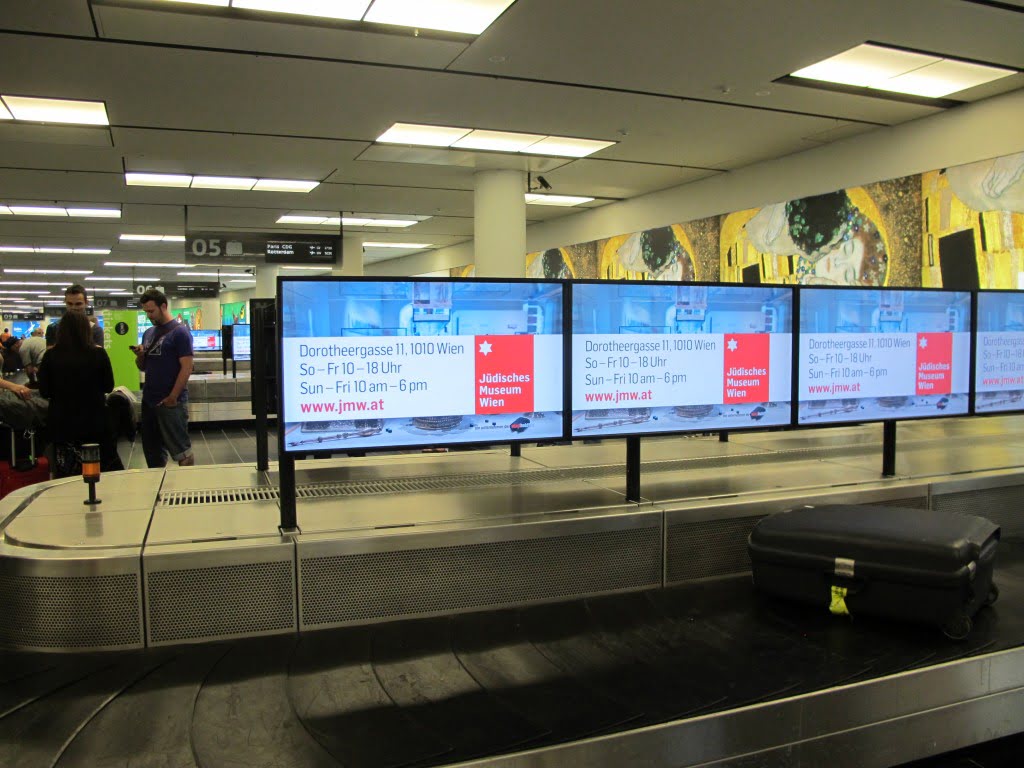
In many European Jewish cities, the requisite Jewish museum is a major attraction for the non-Jewish public (unlike Ian Shulman’s assertion that ‘a Jewish museum rarely becomes a major attraction for non-Jewish public’ in his February eJP piece about The Jewish Memory and Holocaust in Ukraine Museum in Dnipropetrovsk). Footfall figures across European Jewish museums including those in Amsterdam, Paris, Budapest, Berlin (more of which below) Rome, Athens, Vienna and Prague suggest that the overwhelming majority of visitors are not Jewish, and further, these museums have extensive educational programmes for non-Jewish school children. Jewish visitors, alas, tend to be tourists.
And she examines her own recent thinking about the role of Jewish museums — and the different types of Jewish museums — in Europe – “how, for example, is a Jewish museum embedded within its own local Jewish community different to a Jewish museum that exists in a vacuum, devoid of a community, deracinated of a Jewish presence.”I would suggest that a philanthropic foundation mandated to support Jewish culture is caught in that awkward space between past and future, for it must function in the present. The Board of our Foundation, which takes pride in promoting the cultural heritage of European Jewry, is motivated by three factors in its support for Jewish museums. Firstly, as the guardians of important Judaica collections, Jewish museums must be supported with the resources to ensure that there are proper inventories, provenance research, adequate storage and display facilities and professional staff with the skills and expert knowledge to manage the collections. Secondly, Jewish museums, especially those in multi-cultural Europe, have an important socio-political role to play in exploring the tensions between universalism and particularism – to what extent can other communities learn to reflect on their own experiences of immigration, acculturation and assimilation from the Jewish experience. Finally, Jewish museums involved in their own local Jewish communities are potential avenues for identity building, particularly where the formal structures within the community are rigid, paternalistic and impervious to new ideas of educational innovation. Foundations that encourage and support the varied use of museum space to nurture community engagement and Jewish education are harbingers of new and creative expressions of Jewish life.
Read the entire essay here